

INTRODUCTION
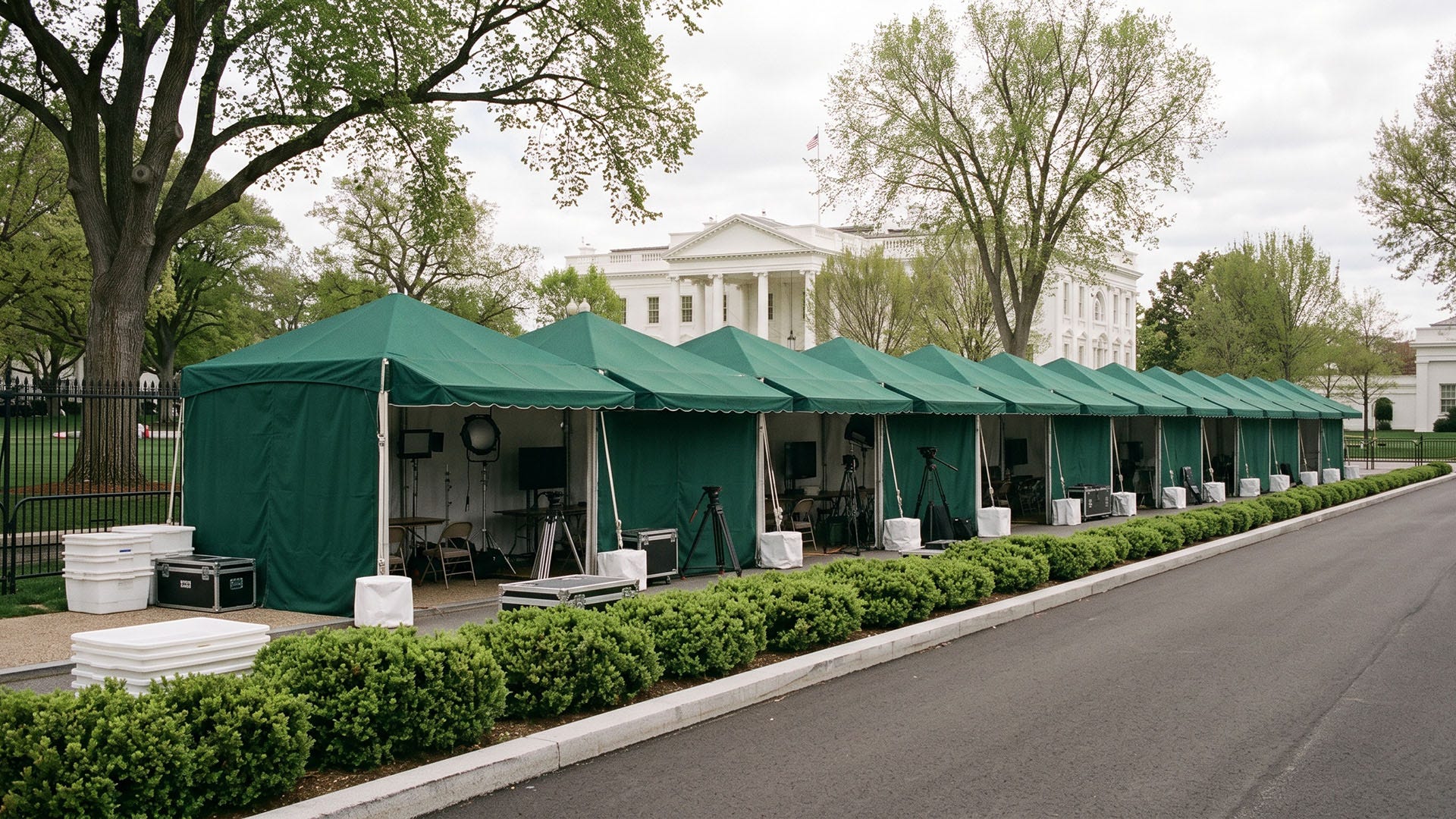
It is universally accepted that many Presidents have had a long history of distrust and scorn for the press generally. George Washington faced severe criticism over his foreign policy toward France, and he made his disdain for the press known. Thomas Jefferson outright accused the press of publishing purposeful falsehoods during a period of no-holds-barred personal and political attacks that make today’s coverage seem tame. In the modern era, Nixon skirted the law to join issue with what he deemed irresponsible journalism sounding in attacks on his war policies. Obama arrested and harassed journalists using espionage laws to chill coverage of his foreign policies and war powers. Nixon banned the Washington Post from briefings over the Watergate coverage, and Obama was known to also have banned Fox and others from Air Force One. Obama declared Fox News “illegitimate.” None of this, however, would justify, on the current facts, President Trump’s order banning MS NOW, CNN, and POLITICO from the White House and the confiscation of their press credentials, issued after a vetting process that has been in place for years. Modern jurisprudence interpreting the First Amendment’s protections would, most probably, define the action as government censorship sounding in prohibited viewpoint discrimination. I will distill the law below. These actions will give these outlets, which are merely mouthpieces for the DNC and anything that opposes Trump and his policies, a platform in the courts and the press that will only backfire on the Administration. The current press corps is, in large part, comprised of amateurs who are ill advised and ill informed. They are political hacks who care not about truly effective policies that have positively affected the economy and the safety of our society. The best way to handle this is to join issue with and defeat them by seizing the informational high ground and relentless messaging. Merely defining these outlets as “fake news” may resonate with elements of his base, but Trump will have a difficult time defending this in the judiciary. This was not the way, and these outlets do not need a new bully pulpit weeks from a crucial election.
THE LAW
While I write this, the President is supposedly crafting an Order that will attempt to provide factual and legal cover for his press ban. The President is, pursuant to Article II of the Constitution, the Executive Branch. He acts through his appointed officers as well as others not subject to the Advise and Consent role of the Senate. His ban is certainly government action that implicates First Amendment strict scrutiny. He is a branch of the federal government. The in-person dynamic of the press room has evolved into an important crucible wherein information is gathered, and issue is joined on myriad issues of public concern.
The First Amendment is clear:
“Congress shall make no law … abridging the freedom of speech, or of the press,”
The so-called “Press Clause” does not seem to confer additional protections on the press, writ large, and has been rolled up in the overall strict scrutiny analysis of any reviewing court. The United States Supreme Court has set forth how such action by President Trump may be received as follows:
It is axiomatic that the government may not regulate speech based on its substantive content or the message it conveys. Police Dept. of Chicago v. Mosley, 408 U. S. 92, 96 (1972). Other principles follow from this precept. In the realm of private speech or expression, government regulation may not favor one speaker over another. Members of City Council of Los Angeles v. Taxpayers for Vincent, 466 U. S. 789, 804 (1984). Discrimination against speech because of its message is presumed to be unconstitutional. See Turner Broadcasting System, Inc. v. FCC, 512 U. S. 622, 641-643 (1994). These rules informed our determination that the government offends the First Amendment when it imposes financial burdens on certain speakers based on the content of their expression. Simon & Schuster, Inc. v. Members of N. Y. State Crime Victims Bd., 502 U. S. 105, 829*829 115 (1991). When the government targets not subject matter, but particular views taken by speakers on a subject, the violation of the First Amendment is all the more blatant. See R. A. V. v. St. Paul, 505 U. S. 377, 391 (1992). Viewpoint discrimination is thus an egregious form of content discrimination. The government must abstain from regulating speech when the specific motivating ideology or the opinion or perspective of the speaker is the rationale for the restriction. See Perry Ed. Assn. v. Perry Local Educators’ Assn., 460 U. S. 37, 46 (1983).
In the current factual scenario, it appears that although many outlets remain that do not share the political policies of the Administration, there nonetheless has been an arbitrary exclusion of long-standing credentialed outlets on the basis that they represent “fake news.’ We must never forget that in the Biden Administration there was a similar labeling of COVID reporting and information on varied media outlets that Biden’s people called “misinformation.” Many civil liberties were curtailed, and expressive speech attempted to be stamped out in the name of supporting policies that have been proven to be not only wrong but destructive to health as well as the economy. This was “government action,” and at least one federal court found that the Biden Administration coerced Facebook and others to remove or block much of what we now know is the objective truth. We cannot return to this. Even the nonsensical questions and baseless allegations of an ill-informed press corps do not support a ban on speech or coverage of speech. Win in a different way.
SHORTLY AFTER TAKING OFFICE AND STARTING HIS SECOND TERM, PRESIDENT TRUMP SIGNED AN EXECUTIVE ORDER THAT PLACES HIS ACTIONS INTO SERIOUS QUESTION
The Executive Order sets forth, in relevant part, the following:
By the authority vested in me as President by the Constitution and the laws of the United States of America, and section 301 of title 3, United States Code, it is hereby ordered as follows:
Section 1. Purpose. The First Amendment to the United States Constitution, an amendment essential to the success of our Republic, enshrines the right of the American people to speak freely in the public square without Government interference. Over the last 4 years, the previous administration trampled free speech rights by censoring Americans’ speech on online platforms, often by exerting substantial coercive pressure on third parties, such as social media companies, to moderate, deplatform, or otherwise suppress speech that the Federal Government did not approve. Under the guise of combatting “misinformation,” “disinformation,” and “malinformation,” the Federal Government infringed on the constitutionally protected speech rights of American citizens across the United States in a manner that advanced the Government’s preferred narrative about significant matters of public debate. Government censorship of speech is intolerable in a free society.
Sec. 2. Policy. It is the policy of the United States to: (a) secure the right of the American people to engage in constitutionally protected speech;
(b) ensure that no Federal Government officer, employee, or agent engages in or facilitates any conduct that would unconstitutionally abridge the free speech of any American citizen;
(c) ensure that no taxpayer resources are used to engage in or facilitate any conduct that would unconstitutionally abridge the free speech of any American citizen; and
(d) identify and take appropriate action to correct past misconduct by the Federal Government related to censorship of protected speech.
Sec. 3. Ending Censorship of Protected Speech. (a) No Federal department, agency, entity, officer, employee, or agent may act or use any Federal resources in a manner contrary to section 2 of this order.
(b) The Attorney General, in consultation with the heads of executive departments and agencies, shall investigate the activities of the Federal Government over the last 4 years that are inconsistent with the purposes and policies of this order and prepare a report to be submitted to the President, through the Deputy Chief of Staff for Policy, with recommendations for appropriate remedial actions to be taken based on the findings of the report.
THE WHITE HOUSE,
January 20, 2025.
The press are citizens exercising free-speech rights in the heart of government. There appears to be no security or other justification for an outright ban. At a minimum, any such ban must be accompanied by a due process check on such action, and what form that may take will be a further subject of judicial analysis and scrutiny. A Truth Social post declaring that the outlets are “fake news” meets no such standard.
CONCLUSION
Our Republic has as its foundation a Constitution, which includes a Bill of Rights deemed essential by many Founders to its ultimate ratification. The First Amendment’s unqualified command is clear and well defined through centuries of jurisprudence. We await the details of any Executive Order or other command that sets forth the details which may justify such drastic action. Frankly, the better path is to win the day with the superior argument and the factual high ground. That is what press secretaries are for. We will see, but the precedent does not forecast that this ban will be permanent. It shouldn’t be, and if precedent setting in an unlikely scenario, expect a future opposition party President to do the same, and we all lose.